
At nineteen, I married a man I barely knew because everyone around me believed it was the perfect match. Within five months, the dream had unravelled, and I found myself back at my parents’ home, trying to understand how my life had changed so completely. This is the story of those five months and what came next—the pain, the lessons, and the girl who slowly found her way back to herself.
Chapter 1: The loneliest room in the house
The strongest memory I carry of my first marriage is not of a person or an incident, but of my bedroom in the gathering darkness of evening.
I lie on the bed, watching the last light of the day dance across the walls. The sound of the ocean reaches me faintly, because the famous RK Beach is just behind our grand, fortress-like mansion on Kirlampudi Layout.
It amazes me how lonely a person can feel while living beside the sea, in a house full of people, and still feel as if the world has forgotten her.
Most evenings would follow the same script. I would return from college in the late afternoon, eat a cold lunch by myself, quickly change my uniform for a fresh pair of salwar kameez and wait for the dreaded doorbell to ring.
I was a painfully shy and reserved 19-year old, married off to a different city and living with strangers who were now supposed to be family. Every waking moment felt like a punishment.
When the bell rang at around 4 in the evening, I would drag my feet downstairs for my driving lesson by the beach, with an instructor who only spoke Telugu and who looked as miserable as me. We would go through the motions of a teacher and a student. He pointed, gestured and sighed. I desperately tried to understand his directions through my brain fog, the air smelling of salt and despair.
Once we returned home, I would find my mother-in-law waiting at the gate, eager to have a word with the instructor about my progress. I never hung around to hear the feedback. I would slip past them, climb the stairs, close the bedroom door behind me and sink onto the bed. By then, even holding myself upright felt like work.
I didn’t know then that sadness could be physical. That it could be dense enough to touch, patient enough to follow you from room to room. Like fine ash settling inside me. That feeling was my constant companion for the five months I spent in my husband’s home.
My 27-year old husband was mostly absent and only made a reluctant appearance at night, to claim the spot on the bed that was the furthest from me. Other than the first few nights after our wedding, there was no physical intimacy between us. The side pillow formed a clearly spelled out barrier.
I would lie awake sometimes, listening to his breathing in the dark, hoping he might turn towards me, or simply close the distance by a few inches. But that never happened.
All that fancy seductive nightwear bought by my aunts as part of my trousseau failed to summon the intimacy they were meant to invite. The romance and tenderness I so craved was not meant to be.
Chapter 2: How it all began
A few months before my 19th birthday, I sat in my father’s study, tying the laces of my sneakers for my evening walk.
I was studying Eng Honours in St Xavier’s and my 1st year exams were just around the corner. Life was on track and I was studying the subject I was truly passionate about. I had set my heart on becoming a professor and this was the first of many steps in the right direction.
It was a weekday and college has been hectic. Before leaving for my walk, I went up to my father and casually peeped into his computer screen. I noticed that he was going through profiles of young men. A little perplexed, I leaned in to see that he was on Shaadi.com. That caught my attention. ‘Baba, what’s all this?’ I asked, thinking that there must be a simple answer to this.
My father looked sheepish. Then taking a few seconds to ponder his answer, he nonchalantly replied ‘Kichhui na bhuchi. Just testing the waters.’ (Bhuchi is what he lovingly called me.) I wanted to ask him why he felt the need to ‘test the waters’, but as usual, I stayed silent.
I was not in the habit of questioning my parents. This may sound unusual, especially because Bengali daughters are often raised to be outspoken, opinionated, and fiercely independent. But my home was an exception. I was well-loved and very pampered but the strings of my life were in a vice-like grip of my parents’ hands. They were the ones who decided the direction, and I followed. I had never been taught that my voice could change the outcome. My opinions existed, but they did not carry weight.
Broaching the topic would make it too real for comfort. So I did what I had always done. I didn’t think about it anymore. I went to college, lived my small routines, and remained blissfully unaware of the storm quietly gathering strength, waiting to break over my life.
One afternoon, I was asked to get dressed. There was to be a photoshoot. For a few seconds, I was thrilled. I imagined possibilities. A modelling opportunity, perhaps. A small door opening somewhere.
Instead, I learnt that the pictures were meant for a prospective groom’s family. And there it was, the ice cold realization, that it was all really happening. Nobody was ‘testing the waters’ here. I was hurtling towards the very thing I had been in denial about. But there was no room to protest.
And so a terribly awkward photoshoot followed. In a local studio owned by someone my mother knew. I had carried 3 changes of clothes with me, all picked out by my determined mother.
I was quite skinny back then and my 5’9 frame should have made the pictures a 10/10. Instead my acute self-consciousness ruined every frame. Confidence is not something the camera can manufacture and I was painfully aware of every inch of myself. It felt like I had too many limbs and not enough instructions.
It was embarassing even looking at the photos. Even the lighting was unflattering. I secretly hoped that these would do the trick and I would be rejected but I wasn’t that fortunate. The groom’s family liked the pictures enough to book a trip to Kolkata immediately. They wanted to move fast and my parents were in a frenzy of excitement. It is all they could talk about.
And meanwhile, I continued to attend classes, hangout with friends and spend hours in the British Council library making notes. It was like binge-watching a comfort show while the universe was busy writing a dramatic season finale for me.
All this while my friends in college knew absolutely nothing about my rapidly-evolving situation. Among my relatives, however, the news had already spread. It was only years later that I learnt how shocked they had been. My pishi and pishemoshai, my kaku and kakima, jethima and mesho had all questioned the haste with which my parents had decided to marry me off. But at the time, I knew none of this. I believed I had been left to fend for myself, with no one willing to speak on my behalf.
My parents never let me see the resistance they were facing from the rest of the family. They carried those conversations in private, while I remained convinced that everyone had quietly accepted my fate.
The expectation had always been different. I would complete my education, perhaps work for a few years, and only then think of marriage. That was, after all, the rhythm of most Bengali families I had grown up around. Daughters were raised no differently from sons, encouraged to study, build careers and step into marriage only when they felt ready – often well into their late twenties and thirties. My story, however, was clearly an exception to the rule.
Chapter 3 – The Boy in the Photographs
The mother of the boy dropped in for tea one balmy evening with a distinguished looking gentleman in tow. They were making a quick trip and were in Kolkata for a very brief time. The family friend was a professor in his late sixties and did most of the talking. The mother of the prospective groom was pleasant enough but spoke very little. I felt her eyes on me all evening as her friend kept shooting questions in my direction, which I answered with happily.
I realised soon enough that he was very well-read. He could talk about books, films, and ideas with the ease of someone who had spent a lifetime being curious. And so I liked him immensely. Even my parents spoke to him far more than they spoke to my future MIL.
At some point, she fished out a wad of photographs from her purse. My curiosity got the better of me and I inched closer. And that was the first time I saw the boy. Honestly, I liked what I saw and for the first time since I unearthed my parents’ plans, I felt a small flutter of excitement in the pit of my stomach. He was 6’2, his mother informed me with a smile, and very athletic. I could see that for myself.
He had a tall wiry frame, an unruly mop of hair, a longish face with sharp, aquiline features. Quite handsome, I thought blushing. But it wasn’t just him in the pictures. It was an entire world captured in fragments. The sprawling house. His parents. He and his brother. The boys playing pool. Relaxing in their indoor swimming pool. Shooting hoops in their backyard. Looking impossibly relaxed, as though this was just an average Tuesday.
I started having a sneaking suspicion about why my parents were making me rush into this marriage at breakneck speed. Judging by the pictures, they were wealthy, very very wealthy. This was more than an arranged marriage. It was a trophy marriage. The kind that came with lifetime bragging rights.
The Vizag trip
“We are going to Vizag next week”, my mother announced after a week of my mother-in-law’s visit, one morning while I was getting dressed for college. My heart sank, but I pursed my lips, saying nothing. Last thing I needed was my mother’s emotional meltdown first thing in the morning.
And so the arrangements began almost immediately. My clothes that I would have to pack were carefully picked out by her. Tickets bought, hotel booked, last minute parlour visits arranged.
Every little thing was scrutinized by my mother. She was especially fond of kalamkari back then and so 2 news pairs of kalamkari salwar kameez were sent for stitching immediately. The rest was an assortment of jeans and long skirts.
The brief flutter of excitement was long gone by then. It was slowly being replaced by a growing sense of dread. Things were moving too fast. I tried telling my mother a couple of times that I wanted to complete my post grads first. It was something I genuinely wanted for myself. But every time I brought it up, she reacted as though I had said something unforgivable.
Somehow, in every situation, my mother would always emerge as the victim. My father would rush in to comfort her and dart accusing glances at me. Each time I tried to speak my mind, I would leave the room feeling guilty about how I had made my mother cry.
‘So ungrateful’, she would moan, ‘she doesn’t realize what all we do for her.’. She would sniff and snivel theatrically, while I sat by her side, wishing I could disappear.
As a 40-year old, I now have the clarity of mind to understand what was happening back then. I was being gaslighted. My feelings were repeatedly dismissed, my doubts were made to seem selfish, and slowly I began to believe that wanting something different from what my parents wanted made me a bad daughter.
Chapter 4 — Falling in Love with an Idea
The Vizag trip was, by all accounts, a success. For me, the biggest surprise was not the house, the family, or even the man I had come to meet.
It was the four adorable puppies tumbling around the magnificent living room while our parents sat nearby, deep in conversation. They had the most adorable names- Mystery, Mischief, Chocolate and Pepper. All my nervousness evaporated as soon as I caught sight of the furbabies.
Somewhere between chasing after the puppies and watching them play, Sandy (my husband) and I started talking. It happened naturally, without the awkwardness I had expected. We sat together in a corner of the room, surrounded by the adorable little distractions, and for the first time, I felt somewhat at ease around him. Sandy’s brother, closer to my age than him, also made a brief appearance and we really hit it off.
The three days that we were there, went by in a blur. There was always somewhere to go and something to see. We went to plush hotels and clubs, did a fair amount of sightseeing, spent hours on the beach, and went on long drives along winding mountain roads. It was breathtakingly beautiful and my heart soared at the thought that this might be my future home.
I remember thinking, almost greedily, that this could be my future. A home within walking distance of the sea. Mornings beginning with the sound of waves outside my window, the ocean quietly announcing the start of each new day. Evenings ending with a stroll on the golden beach.
And beside me, I pictured this tall, handsome young man with his serious face and quiet manner, a man who seemed to carry an air of mystery simply because he spoke so little. Much of the silence between Sandy and me was filled by his brother’s constant chatter. This 15-year old was an absolute hoot, giving me rides on his Harley Davidson bike and cracking jokes even in the most serious situations. His vibrant presence effectively coumoflaged his brother’s bland temperament.
At first, I mistook Sandy’s quietness for reserve. Some people, I thought, simply take time to reveal themselves. I waited for the hidden depths that literature has made me believe, always lies beneath silence.
They never appeared.
Every conversation ended where it had begun. I would ask about books, music, college, politics, the future, the smallest incidents from his day. My questions seemed to disappear into a room with no echo.
He was never rude or impatient. He answered politely enough. But there was no curiosity behind his replies, no thought that opened into another thought. Each exchange reached its conclusion almost as soon as it began.
Things got so bad, that when we returned from Vizag, I took to jotting down topics in a little notepad to keep conversation going during our phone calls. I filled it with topics, questions, anecdotes, anything that might carry us through another conversation. One by one I would work my way down the list. After twenty minutes, sometimes less, the words would run out.
What remained were long stretches of silence. It was excruciating. I came to realise that I had confused silence with substance. Not every quiet man is a brooding poet; sometimes he is just a man with nothing much to say.
I would dread those calls and yet, miss him at the same time. When I brought this up with my parents, as expected, the response was ruthless. ‘Obviously he has nothing to talk about with you. He is a worldlywise business man and you are a chit of a girl! Of course he’ll be reserved. He’s just bogged down with important stuff.’ That was my father.
My mother’s response cut differently. She did not ask whether I was lonely. Instead, she worried about what my doubts might cost us. What if he got offended? What if I spoiled everything? The possibility of losing this carefully arranged future seemed far more frightening than the reality that her daughter had deep despair etched all over her countenance.
And so I stopped speaking about it. I folded those thoughts away, like letters I would never send. My silence wasn’t me giving in but simply me running out of words for people who had already decided not to listen.
Chapter 5 – Red Flags Wrapped in Silk
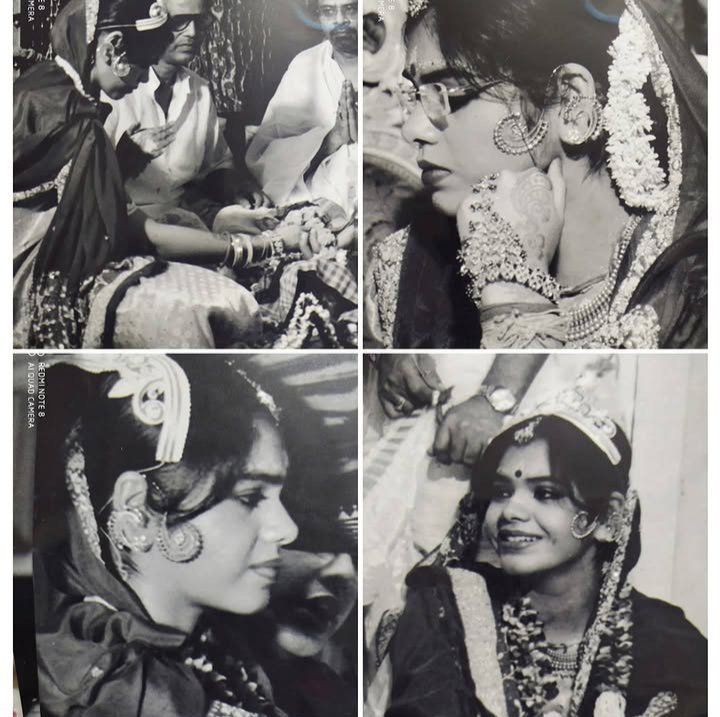
Our wedding was a grand affair and in June 2005, we tied the knot in Kolkata. For a recluse like me, it felt like an eternity. A week-long grand affair. Relatives I hadn’t seen in a decade just materialised out of nowhere. The pressure to stay “on” literally gave me a fever. I was drowning in plain sight.
Meanwhile there was pure bonhomie between the two parties – our aunts, uncles, and cousins locking into this effortless, joyful orbit. I felt completely marooned on the outside of their collective high.
Physically, I was crashing. My throat was raw. My fingers swelled up so much that my rings cut into my skin. My tall, gangly frame was buried under heavy benarasi, kanjeevaram and jamdani sarees, my earlobes bruised from the weight of the gold. It was a living nightmare wrapped in luxury.
The first major red flags started showing up right before the wedding.
Our house staff and a some relatives had been sent over to Salt Lake to deliver the tatta (elaborately arranged trays of gifts from the bride’s side). Sandy’s family and friends had arrived from Vizag a few days earlier, and were staying at my uncle’s charming flat in Salt Lake. It was supposed to be a house full of pre-wedding joy, packed to the gills with their relatives.
But when our driver and maids returned after delivering the gifts, the festive mood completely withered. They had ashen faces and looked incredibly awkward.
Our driver, who had been with us for decades, quietly sought out my father. In a low, uneasy voice, he told us about the absolute chaos they had walked into. The second they crossed the threshold, they were caught in the middle of a toxic domestic storm.
Sandy and his father were locked in a vicious, screaming match, throwing around heavy profanities that had no business being uttered right before a wedding.
In a proper Bengali home, the arrival of the bride’s party is sacred; They are welcomed by the groom’s family with cold drinks, sweets, and genuine respect. But all decorum was thrown out the window that day. They were ignored completely. No one even offered them a glass of water. They had simply walked into the living room, placed the trays full of gifts on the floor and left.
My father appeared to brush off his words, but looked uneasy. He and ma kept exchanging uneasy glances.
Chapter 6 — The Night Before
Then came the terrace party at my house. Things were going smoothly enough until his ex-girlfriend’s sister and parents suddenly walked in. Up until that exact moment, I had no clue they had even traveled all the way from Vizag for our wedding.
When they introduced his ex-girlfriend’s sister to me, she barely managed a greeting. Then, with this infuriating, arrogant sass, she just turned and walked off right in the middle of the introduction. It was from that very moment that everything started going downhill for me. I quickly looked away, desperate to hide the sheer rage on my face.
“Why is she here?” I asked my dapperly dressed fiancé, keeping my voice polite but firm.
“Why shouldn’t she be here? We’re family friends,” he shot back.
He completely blew off how nasty the encounter had been, totally ignoring her hostility. I barely said another word for the rest of the evening. The loud music, the heavy dancing, and the constant clinking of glasses only amplified how terribly this was all going. I distinctly remember sitting all by myself in a corner at my own party, feeling like I was underwater, watching the noise happen above the surface.
Around midnight, the party finally wound down. I went back to my room, exhausted, waiting for Sandy’s goodnight call. When he called, we spoke for a few minutes about nothing in particular. I was half asleep, stifling yawns, when suddenly I heard raised voices on his end. It sounded like some kind of scuffle. Before I could make sense of it, his mother came on the line.
She didn’t bother with greetings.
“Listen carefully,” she said, her voice rising with every sentence. “Sandy told me that you have a problem with our guests. You don’t get to make rules in this family. My son is not yours to control. Those people matter to us far more than you do, so don’t you ever try to come between us.”
And then she hung up. I hadn’t managed to say a single word.
I sat there for a few seconds, staring at the phone, trying to steady my breathing. I had just decided to go to my parents’ room and tell them what had happened when my mother burst into my room.
Without saying a word, she grabbed me by my blouse and dragged me across the house to my brother’s room.
My cousins, who had been chatting there only moments earlier, froze. No one moved. I was still wearing my heavily embroidered zardozi saree from the evening’s celebrations. As my mother pulled me along, I stumbled, struggling to keep my balance.
The moment we entered the room, she started hitting me.
She slapped me over and over with all her strength, punched me in the stomach and kept raining blows until I could barely breathe. Somewhere in the chaos, my saree came undone. I found myself on my knees, dressed only in my petticoat and blouse, desperately trying to shield myself.
Then the door flew open.
My father and brother rushed in. Through blurred vision, I saw my father pulling my mother away while my brother yelled at her for laying hands on me. He was absolutely livid.
My older cousin was beside me almost immediately. She was the one who had summoned my father. Along with two of our domestic helpers, she hauled me to my feet and half-carried me back to my room. I remember peering at her face and thinking that I had never seen her this terrified.
As they laid me on the bed in the darkened room and covered me with a bedsheet, I could hear hushed, outraged whispers outside. Slowly, I pieced together what had happened after that phone call.
After screaming at me over the phone, my future mother-in-law had immediately called my mother. She had told her that I was already creating problems in their family, bullying her son, and that I had misbehaved with her.
My mother believed every word.
Convinced that the wedding was about to be called off because of her arrogant daughter, she never stopped to ask me what had happened. She didn’t ask for my side of the story. She simply decided I was guilty and punished me for it.
Someone gave me painkillers and put me to bed. My fever returned that night. I woke up several times, crying from pain and fear. Each time, the room was empty.
There were no comforting words. No reassuring touch.
Just darkness.
I was to get married the next day.
Chapter 7 — The Fire that would not light
The wedding hall was overflowing with people. Both families. My cousins. His cousins. School friends. College friends. Elderly relatives issuing instructions nobody seemed to follow. Somewhere, a child was crying because his kurta was itchy.
I sat on the ostentatious bridal seat beneath a canopy of tuberoses and marigolds. Gold jewellery weighed heavily around my neck and wrists. I had lost so much weight in the previous weeks that my blouse refused to stay in place. My aunt appeared every few minutes with another safety pin.
“Don’t move,” she whispered. “Everything will come undone.”
“I don’t think anything is holding together anyway,” I muttered.
She smiled absent-mindedly. She thought I was joking.
Just before the ceremony began, I swallowed a paracetamol with a sip of water. The fever had eased for the moment, but I knew it would return before long.
The air was thick with the smell of flowers and a medley of perfumes. My friends from Xaviers sat in a wide circle, laughing, posing for photographs and eating fish fries and kebabs on tissue papers. They looked exactly as they always had.
But I felt a hundred years old.
I sat on an ornate red velvet throne beside my groom, dressed in his silk dhoti, panjabi and topor. He looked immensely pleased with himself, thrilled that the entire evening revolved around him.
The rituals began. The priest chanted steadily while relatives leaned forward to catch every moment.
Then came an unexpected interruption.
The sacred fire refused to light.
The priest frowned and added more wood. Someone handed him another bowl of ghee. A handful of khoi was offered into the pit. Still nothing. Smoke curled upwards, but the flames would not catch.
“What is happening?” an elderly relative whispered.
“The wood must be damp,” someone answered.
Across from us sat my mother-in-law, watching every detail. Traditionally, in many Bengali families, the groom’s mother does not remain present for the main wedding rituals. It’s considered inauspicious. But that was no concern of hers. She was there because she intended to oversee everything herself.
Eventually, the fire came alive.
The mantras resumed. We completed the saptapadi. He placed vermilion in the parting of my hair during sindoor daan. The conch shells blew. Women let out long uludhwani. Cameras flashed from every direction.
The sampradan was performed by my maternal uncle instead of my father. Since my husband and I belonged to the same gotra – a departure from orthodox Hindu custom, the priest had deemed it necessary that my mama (maternal uncle) who had a different gotra, should give me away and not my father.
Sometime after midnight, the rituals came to an end. I was beyond exhausted.
We returned home in a convoy of cars. The bashor raat unfolded exactly as Bengali wedding nights always do. Antakshari. Dumb charades. Endless teasing. Someone insisted the groom sing. Someone else demanded money before letting us into the room. Laughter echoed through the house until almost dawn.
I had changed into a lighter sari. Fresh vermilion streaked brightly through the parting of my hair.
Every now and then, I looked towards my husband.
Surely, at some point, our eyes would meet.
Surely, he would say something.
Instead, he remained surrounded by cousins and friends, laughing, singing and trading jokes. If he looked at me even once that night, I do not remember it.
The next day, we boarded the train to Visakhapatnam.
Nearly forty people travelled together. Every compartment seemed to belong to someone from the family. Food packets appeared every hour. There were card games, gossip and loud debates over film songs.
I sat by the window and barely spoke.
Outside, Bengal slowly gave way to unfamiliar landscapes. Rice fields blurred into rivers. Stations came and went. I watched them all without really seeing them.
It felt as though someone had quietly closed the door on my youth while I wasn’t looking. At nineteen, my carefree life had ended before I had even understood how precious it was.
At the platform, my father looked brisk and distracted.
“I’ll see you in Vizag,” he said. “There’s still so much left to organise.”
The reception was to be held at a five-star hotel. After that, there would be a beach party and another celebration at my husband’s penthouse. Guests would be flying in from different cities. There were hotel bookings to confirm, cars to arrange and relatives to receive.
His mind was already on the next event.
My mother did not come to see me off. Just a hurried goodbye on the stairs of my parental home before I left for the station.
Chapter 8- The house of other people
Every inch of my bedroom floor was covered with suitcases, clothes, jewellery boxes, half-opened bags and things I had no idea where to put. I sat in the middle of that chaos, trying to create some kind of order.
The house was overflowing with people. Relatives moved in and out of rooms, voices rose and fell, someone was always looking for something.
My two cousins, who had accompanied me from Kolkata, were constantly running up and down the stairs, trying to make themselves useful to my mother-in-law. Every now and then, they would appear at my door.
“How much have you unpacked?” they would ask, peering into the disaster around me.
I would smile and say, “Almost done.”
I was nowhere close.
It was a wedding house. Chaos was expected. But for me, the chaos felt overwhelming because I was already struggling to find my place in it.
The broken toilet
The bathroom attached to our bedroom needed repair. So, the morning after my wedding, instead of waking up in my new home and easing into married life, I found myself carrying a towel and a pouch of toiletries across the road to the guesthouse where some of the relatives were staying.
It must have looked almost comical from the outside – the newly married couple walking hurriedly to another building with their bath essentials in hand because their own bathroom refused to cooperate.
But I did not find it funny.
I found it humiliating.
Small inconveniences have a strange way of becoming much bigger when you are already unsettled. The broken bathroom was not just a broken bathroom. It became another reminder that nothing around me felt familiar.
Slowly, I began noticing things about my husband that I had overlooked earlier.
He was, in many ways, a manchild.
His attachment to his mother was unlike anything I had seen before. It was almost as if an invisible thread still connected them. Whenever he got the chance, he would disappear into her room. They would sit together, speaking in low voices, and the conversation would abruptly stop whenever I entered.
If his mother and I were both in the kitchen, he would appear within minutes, hovering around her, asking questions, offering help, finding reasons to stay.
I often watched them and wondered if there was space for another woman in that relationship.
After weeks of ceremonies, receptions and endless celebrations, the wedding finally ended. The house slowly emptied. The laughter faded. The relatives left. The distractions disappeared.
And that was when my real marriage began.
Not the one filled with flowers, photographs and smiling faces. The real one.
The one where I had to share a home with someone who was still, in many ways, a stranger.
I was supposed to be settling in. Instead, every day in that enormous house with its cavernous rooms and long stretches of silence made me feel smaller and smaller.
Chapter 9: Nowhere to run – Between a rock and a hard place
Soon, I joined a local women’s college and enrolled for English, psychology and journalism. Academically, it was something I was excited about. But the college itself felt like a world away from what I had known.
My one year in St. Xavier’s Kolkata had been full of energy. We basked in the pride of being Xaverians. We discussed books and films. We wandered around Park Street after college in a large group. We skipped classes and spent hours at the Park Street Cemetery. We sat on the college grounds listening to a friend strum the guitar. We hung out in Gariahat, drank tea from earthen cups and stretched ordinary afternoons into memories.
That was my world.
This was not.
The difference was not just in the college. It was in the atmosphere. The conversations. The way people interacted. The confidence I had carried so naturally in Kolkata seemed to disappear.
Many days, after sitting through a class, I would quietly walk into the washroom, lock myself in a stall and cry for a few minutes before returning as if nothing had happened.
I felt ridiculous doing it.
I had lost the life I understood and was trying to build a new one in a place that felt completely alien to me.
The ragging made things worse.
This was an all-girls college, and I discovered very quickly that girls could be far crueler than I had imagined. I had barely experienced anything like this in Kolkata.
Here, I became a target almost immediately.
But I eventually found a small group of friends, four or five girls who became my refuge. Two of them spoke mostly Telugu with a little English. The others came from naval families and were more comfortable speaking English, much like me. With them, I could finally breathe.
The seniors, however, showed no mercy.
They would barge in during classes, call out a few juniors and march us to the field in the middle of the day. Some rituals were harmless – making us sing or dance in full public view or the requirement to address seniors as “ma’am” every time we passed them.
But some crossed the line.
Standing under the harsh sun, with the ground burning beneath our feet, we were made to run laps, do sit-ups while holding our ears and perform humiliating tasks.
All of it in our salwar kameez, which somehow made everything feel even more ridiculous.
The college bathrooms were another ordeal.
They were dark, damp and unpleasant. None of the doors had proper locks. Someone always had to stand outside and keep watch while another person used the toilet.
The reason was disturbing.
Years earlier, a student had attempted suicide inside one of those bathrooms.
The irony was not lost on me.
Even the bathrooms in my own house did not have locks.
My sister-in-law, who was now happily married, had once tried to end her life by consuming Baygon spray because she had not been allowed to marry the man she loved.
Every little thing began collecting inside my mind.
The constant physical discomfort. The malfunctioning appliances (blamed by my mother-in-law on the sea air and moisture).
The loud drone of the air conditioner that disturbed my sleep every night.
The way my brother-in-law ill-treated the puppies at home.
None of these things, individually, seemed enough to break someone.
But together, they slowly chipped away at me.
And then there was my marriage.
The distance between us grew wider every day. We spoke very little. We tried to bridge the gap physically a few times, but the emotional distance remained.
Eventually, he started sleeping on the sofa outside our bedroom.
And every night, I slept alone in our large double bed.
At college, I was being humiliated by seniors.
At home, I was met with silence.
Every night, before falling asleep, I wished for the same thing – to wake up in Kolkata on a normal weekday morning. To hear familiar voices. To get dressed for college. To discover that all of this had been nothing more than a terrible nightmare.
But there was one unexpected kindness waiting for me in Vizag.
My friends.
We were completely different from one another. Yet somehow, we formed a bond.
We sat on the college field and shared our lunches. We went on evening scooty rides along the beach, me always riding pillion. We sat on the parapet wall facing the sea, eating bhel and watching the sun disappear into the water.
It was not every day. Maybe twice a week.
But those evenings became my escape.
My little piece of the life I had lost.
When people eventually found out that I was married, and that the marriage was not a happy one, the atmosphere changed.
The ragging slowly stopped.
Some seniors began coming to class just to ask if I was okay. Classmates started bringing extra food in their tiffins because their mothers felt sorry for me.
A few of my friends already knew my husband and his brother from school. They were surprisingly open about their opinions.
“Your brother-in-law is an asshole,” one of them told me. “But your husband… he’s just weird. He was a senior. We mostly saw him by himself.”
“Didn’t he flunk?”, another asked. The others exchanged cautionary glances and fell silent. My heart sank.
Apparently, he had never been particularly popular. He had few friends and preferred keeping to himself.
Perhaps that explained why my evenings with my college friends bothered him so much. For the first time, I began to understand that maybe my happiness itself had become a reminder of everything he did not have.
Chapter 10: The washing machine rule
It did not take me long to realise that my husband and his mother were a team.
The more I began enjoying the little life I had built outside the house, the more determined they seemed to be to chip away at it.
Most evenings, after college, my friends and I would ride down to the beach or stop somewhere for bhel or coffee before heading home. Those few hours became the brightest part of my week.
The moment I returned, an interrogation would begin.
“Where were you now?”
“With my friends.”
“Again?” she would snap. “Why are you forever roaming around the city with those girls? My friends keep spotting you everywhere. Don’t you have any shame? You’re a married woman now. Behave like one.”
She rarely waited for an answer.
“Have you ever seen Sandy or Chhotu wandering around like this?”
I bit my tongue.
It seemed pointless to remind her that to wander around town, one first needed friends to wander around with.
Funnily enough, my mother-in-law was free to visit her friends, entertain them at home and spend entire afternoons chatting on the telephone. My friendships, however, were treated as a character flaw.
There were other ways of reminding me where I stood in the hierarchy of the house.
Every morning, piles of clothes went into the washing machine.
Mine did not.
“You’ll wash your clothes yourself,” she announced one day. “In the bathtub. Don’t put your things in the washing machine.”
There was no discussion.
I simply carried my bucket upstairs.
One afternoon, I was squatting on the bathroom floor, scrubbing my college uniforms, when my younger brother-in-law burst into the room with a newspaper in his hand.
“Boudi, look at this…” He stopped mid-sentence. “What are you doing?”, he asked quietly.
“Washing my clothes.” I replied.
“I can see that. Why?”
“Ma said I’m not supposed to use the washing machine anymore.” Before I had even finished speaking, he had disappeared.
A few moments later, shouting erupted downstairs. Then came the crying.
Then my mother-in-law’s voice, loud enough for the entire neighbourhood to hear.
“It’s either her or me. Decide right now. I won’t stay in this house if she’s going to have her way.” It was a sentence I would hear many times over the next few months.
Whenever she was challenged, she drew the same battle lines. Her or me. That afternoon, however, she lost.
My brother-in-law refused to back down. My father-in-law stood firmly beside him. For the first time, I realised that our home was divided into invisible camps.
My father-in-law and brother-in-law treated me with fairness, sometimes even tenderness.
My husband never left his mother’s side.
The fault lines in the family were now visible. The loyalties were clear. I was grateful to my father-in-law and Chhotu for standing up for me, for showing me kindness when I needed it most. But I could also feel the weight of what had changed.
I had walked into a family with its own rules and its own battles, and I did not yet know how to find my place in it. I felt like I was standing at the edge of a cliff, unsure of what lay ahead, but certain that the ground beneath me was no longer firm.
Chapter 10: Waiting for baba
My throat burned constantly. My head spun. Nausea rose in waves. Even walking to the bathroom felt like a battle. There was no one to hold my hand. No one to ask if I was alright.
This was my fourth month in Vizag. After struggling for as long as I could, I stopped going to college.
Days lost their shape. One miserable moment blended into another. I existed from one bout of weakness to the next, waiting for the hours to pass.
If I stood up too quickly, darkness would rush into my vision. I would grip the nearest wall, afraid I would collapse. My breathing came in shallow, broken gasps.
When I undressed, my ribs stared back at me. My collarbones jutted out sharply. I would have been proud of such weight loss if it had come from choice, from discipline, from some personal victory.
But this was not a victory. This frightened me. I did not know what was happening to my body.
My skin had turned a dull yellow. Even the whites of my eyes had lost their brightness. I looked like a corpse.
By then, I had also acquired the kind of wisdom that does not come from years, but from wounds.
I realised every second that my suffering was an inconvenience to the people in this house.
Not an emergency. Not a reason to worry. Just an inconvenience.
When I finally told my mother that I felt like I was dying, I expected fear. A mother’s instinct. A moment of panic.
Instead, the first thing I heard was:
“Please don’t tell me you’re pregnant. I really cannot handle another problem right now.”
I remember those words more than anything else.
My body was collapsing. My mind was barely functioning. And yet, the crisis she heard was not my illness. It was the possibility of embarrassment.
“You have to complete your graduation before having a baby,” she continued. “How could you be so careless? Couldn’t you have used protection? What will chhoto pishi say if she finds out?”
I sat there holding the phone, too exhausted to even defend myself.
While I was trying to tell her that I was not okay, the conversation slowly shifted, as it often did, to how my situation was affecting her. I could hear her anger spill over onto my father. The stress I was causing. The trouble I had created.
I was still on the line. But my parents were locked in a war of words.
I quietly hung up.
Once completely bedridden at home, the situation truly became intolerable. Time moved at a glacial pace. My stomach growled with hunger and yet even a morsel of food would immediately result in projectile vomiting. There was no one to clean up the mess. The pool of puke would lie beside my bed for days till I crawled out of bed and cleaned it myself.
Sandy saw my near-collapse state as a sign of rebellion. My emaciated frame meant nothing. I was just being lazy, forcing his mother to shoulder the extra work. My heart broke into a million pieces when Chhotu too turned resentful.
I would see him passing my room sometimes and would call out to him in a weak voice. I needed a bottle of water, I needed nourishment. I realized that he was pretending not to hear me. I would keep calling out and no one would answer. My in-laws had their bedroom downstairs while the 2 brothers lived on the same floor as me.
And so I couldn’t understand why none of them realized that I was gradually sinking.
Sandy would sometimes strut into my room and hand me a packet of biscuits and then walk out again. My room was always musty and the sheets unwashed. Sandy had taken to sleeping either on the sofa in the living room or beside his mother downstairs.
During that time, I don’t remember my parents calling me much. Or maybe my fevered brain was omitting certain details.
The only ones who never abandoned me were the puppies. They waited for me patiently everyday, waiting to be let in. Every evening, I would hear their familiar sounds outside my door. The scratching of paws, the impatient whines, the different barks of four little creatures who somehow knew I needed them.
When I opened the door, they would rush in. Two would immediately curl up and go off to sleep beside me. The other two would stay awake, as if keeping watch. They licked my face. Pressed their warm bodies against my cold, bony arms.
They were my lifeboat when I was drowning.
When my mother finally called after several days, she asked the question that seemed most important to her.
“Are you going to college?” I told her I couldn’t.
I didn’t even know how many classes I had missed by then. Her rage and panic didn’t bother me anymore.
Sometimes friends called. I would stare at the ringing phone and let it go silent. Speaking felt like lifting a mountain. Every word required more energy than I had.
Even though I had not expected my mother to show much concern, I had not expected such cruelty either.
“Go to a doctor,” she snapped at me on the next call. “Ask your mother-in-law to take you. You cannot leave college. What will people say? Why are you putting me in this position?”
By then, even my mother-in-law had begun to accept that I was genuinely sick. This was not an act, something she had been telling everyone. That I was refusing to get out of bed just to make life difficult for everyone.
The visit to the doctor confirmed something I already knew. The visit was just an eye wash. A way to gaslight me into thinking that I was not sick at all.
No tests were suggested. I would find out much later in Kolkata that I had been suffering from dangerously high jaundice. That it could have been fatal. And what was I prescribed by the Vizag doctor? Antacids!
The doctor was a family friend who spoke to me with a lot of love and concern. I was so light headed that I had trouble focusing. I heard my mother-in-law complain about my ‘dieting’ and how I was deliberately starving myself.
She was worried that people would eventually think that she was ill-treating her daughter-in-law. The poor woman looked so devastated that even I began to question my reality. Was I indeed trying to lose weight? So this was all to look fit? Had I been so obsessed with looking good that I had pushed my own body to the edge?
It suddenly became clear to me that even my suffering had no ownership. Even when I was the victim, someone else’s pain, someone else’s anger, someone else’s tears always took centre stage. I was left standing in the corner of my own tragedy.
The same thing had happened the night before my wedding, when my mother’s hands had left me bruised and broken. While I lay in pain, she cried. And my father held her, soothed her, and tried to console the person who had caused the wound.
Now, months later, I was watching the same story unfold again.
The solicitous doctor now looked at me sternly and wagged a finger at me, ‘Beta, this is so silly, you need to start eating. You need to get back on your feet. See how you are upsetting your mumma?’
My ‘mumma’ dabbed at her eyes but never once looked at me.
That night, the walls of the house became witnesses to a conversation I was too weak to participate in. My parents and my in-laws spoke over the phone. The family gathered around the dining table while I lay curled up on the sofa in the living room, barely aware of what was happening around me.
My father was on speaker.
They told him how ill I was. How difficult things had become. How they felt cheated. As if I was a faulty product that had been delivered to their doorstep.
What they did not know was that the story had already begun to unravel.
A few days earlier, the maid who had left their house called my father from the railway station. She had endured her own version of torture in that house. For months, she had worked without dignity, expected to obey without question, until she was dismissed without being paid the three months’ wages she was owed. Before she boarded her train, she told my father everything she had seen.
“Take her home,” she warned. “She may not survive much longer. If you don’t take her away immediately, you will only come back to perform her last rites.”
And Baba listened.
He booked the first ticket he could find. Packed a small overnight bag.
He was coming for me.
I knew none of this. I was lost inside a fever, drifting in and out of sleep, sometimes calling for my grandmother, who had been dead for years. While I lay there, believing I had been forgotten, my father was already on his way.
I have often wondered about that. Whether my grandmother heard me somehow. Whether she sent him.
But he was coming.
Chapter 11: The Last Time I Saw the Sea
I am on the train. Sandy has accompanied us to the station to see us off. He’s wearing a spotless white kurta pajama, an odd attire for the station. But we’re holding hands and I find him handsome again. Now that I am close to being saved – I can once again think of my husband with love. I think he feels the same way. Just when the train starts moving, he kisses me full on the mouth while my father is busy shoving the luggage under his berth. I don’t know it then, but this will be the last act of intimacy we ever share. We will never be man and wife again.
A few days after the call to my father, one early morning, as I lay inert in bed, I suddenly heard baba’s voice in the sitting room below. For the first time in days, I suddenly found the strength to lift my head from the grimy pillow and strain my ears, trying to figure out if I was imagining things. I heard laughter in the living room and the clinking of cups and saucers. I slowly hauled myself out of bed and almost crawled down the spiral staircase.
Baba’s face lit up the moment he saw me. In one swift movement, he got up and gathered me into his arms. He carried the scent I had known all my life: cologne, clean clothes, and something that was simply Baba.
Months later, back in Kolkata, he told me what he had seen that afternoon: a girl with her hair falling out, a body reduced to bone, standing at the foot of the staircase like an apparition. He said he was shaken to the core at the sight but had swallowed it down because he knew I needed him to be steady.
The rest of the day unfolded as though someone had quietly lifted a weight from my chest. I found the strength to sit with everyone, to join their conversations, even to eat a few mouthfuls. I threw up later, but it no longer seemed to matter. For the first time in months, my body felt as though it was trying to return to me. My mother-in-law was all smiles and sunshine, slipping effortlessly back into normalcy, as if the past few days had not happened.
The rest of the day passed in a strange blur. Somehow, with Baba beside me, I was inching back to who I once was. My body was still fighting its battles, but something inside me had shifted.
Looking back, I sometimes think the jaundice was only the visible part of what had happened to me. The deeper illness was something no blood test could measure. It was the despair that had settled into my bones, the kind that slowly convinces you that you are at a point of no return.
Just seeing my father made me realize that I still had things to live for. We went to the club for dinner that night and enjoyed the familiar drive along Beach Road. That night, seeing the magnificent foam crusted waves crashing on the shore against the full moon night did not inspire any romance or awe in me. I couldn’t wait to get away.
The ocean that was once full of possibility now carried the memory of everything I had endured beside it. It had witnessed my loneliness, my fear, and the months in which I stopped being the girl I had been before. I knew then, with a certainty I could not explain, that I would never be able to live beside the sea again.
Chapter 12: Howrah Station, Jaundice and a Second Chance
The oh-so-familiar chaos of Howrah Station greeted me first. The dust, the grime, the relentless crowds, and the unmistakable perfume of a railway station that had seen millions of arrivals and departures before mine. There was the overpowering smell of humanity in all its forms: sweat, damp walls, old leather, and things best left unnamed.
And yet my heart soared as I embarked from the train onto the platform the next day. It was October, and Kolkata was already buzzing with the excitement of Pujo. The city was preparing for its annual madness. The glorious week of Durga Pujo, when every Bengali waited to surrender to food, new clothes, pandal hopping, and endless celebrations. Bamboo structures for pandals were popping up everywhere, shoppers crowded the streets, and once we moved away from the station, the unmistakable fragrance of shiuli phool filled the air. It was the scent of autumn, nostalgia, and home.
Baba looked mightily pleased at the look on my face. He kept patting my hand and smiling to himself. As the car sped towards home, he cleared his throat and glanced at me.
“Why don’t you stay back here for some time?” he said. “Complete your studies. You can always return later if you want.” He said it simply, almost casually, as though he were suggesting something small and practical. But those few words opened a door I had not even known existed.
For a moment, I could not speak. I turned towards the window and watched the city pass by, trying to absorb what I had just heard. A strange calm came over me. I only nodded. And that was all.
Years later, I would look back and realise that, with those few ordinary words, I was given back what had been snatched away so callously.
My reception at home was a bit of an anti-climax. My mother stood at the head of the stairs, surrounded by the familiar faces of the women who had been part of our household for years. Some of them had known me since I was a child, had watched me grow from a little girl into a young woman leaving home for marriage.
They fussed over me, lamenting how thin I had become, their eyes filling with a mixture of worry and tenderness. My mother, however, chose a different response.
She looked at me, smiled, and shook her head as though she had just caught me in some elaborate performance. “All this drama to get baba to get you home for the pujas, huh? The way he spoils you!” She rolled her eyes and grinned. Then she pulled me into a quick hug, the kind that was over almost before it began, but somehow said everything. I leaned into her, realizing how desperately I had missed her.
My brother was his usual jovial self, and enveloped me in a bear hug. My bags were taken to my room and I went and lay down in my parents’ master bedroom, the fatigue of the journey suddenly washing over me. The quiet ticking of the clock, the smell of the floral room freshener and my mother’s voice outside the door instructing the cook about lunch – gradually brought me back to life little by little.
Recovery was slow. The next day, I went to our family doctor, Dr. Mallik. For a few moments, he simply looked at me, searching his memory. I had to tell him my father’s name and where we lived before recognition slowly returned to his face.
Then I saw the change in his expression. He remembered me. He had attended my wedding.
He did not ask how I had ended up this way. Perhaps he already knew.
Instead, he examined me quietly and immediately put me on a strict recovery diet. I was to take lots of fresh fruit juices, coconut water, light dal, rice, khichuri, soups, and plenty of pomegranate juice. My body, which had been running on almost nothing, needed to be rebuilt slowly.
The blood tests confirmed what was already visible: jaundice, a bilirubin level of 13, and dangerously low haemoglobin.
Meanwhile, Sandy and I spoke every other day. I think we were both relieved not to be in the presence of each other. “When are you coming back?” he would ask desultorily. I felt he had been instructed to ask this. “I can barely walk on my own. I need to get well first. Isn’t that what your mother wanted? That I only return AFTER I am absolutely ok?” – the jibe would always hit home and make him sulk some more.
But here in Kolkata, other plans were in the works. Baba was in damage control mode now.
Chapter 13- And then I had to make the call
It felt, for once, as though the gods had decided to throw me a few crumbs.
I was back at St. Xavier’s. Technically, I was repeating the year. I had lost too many months, and my health had taken such a beating that studying for long hours was still beyond me. I could not simply pick up where I had left off and race alongside the rest of my batch.
My body had its own timetable now. It tired easily. My mind wandered. Some days, even concentrating on a page for an hour felt like an achievement.
But I was there.
And that was enough.
Slowly, almost cautiously, I slipped back into the life I had known before marriage. College. Friends. Tuition. Walks. Evenings that stretched lazily into nights. And then, before bed, those long, pointless conversations with my brother that we had been having since we were kids.
There was comfort in the ordinariness of it.
Every morning, when I walked through the familiar gates of Xavier’s, I felt an almost physical rush of gratitude. I would look around at the students, the corridors, the noise, the familiar faces, and silently thank whatever power had brought me back here.
I had not realized how much I had missed being an ordinary teenage girl.
I was eating properly again. I was sleeping even better. The frightened, hunted look that had become my face in Vizag was slowly disappearing.
My cheeks were filling out. There was colour in my skin again. My body, which had spent months shrinking into itself, was beginning to relax.
I was becoming myself again.
And that, unfortunately, was precisely what frightened my husband.
Sandy had begun to realise that I had no intention of returning to Vizag. At first, the phone calls were merely tense. Then they became arguments. There were accusations, tears, anger, pleas. The conversations seemed to have only one destination, and neither of us wanted to say its name.
After the Durga Pujas were over, one afternoon, Baba finally told me that it was time.
It was time to make the call.
The call I had been dreading for weeks.
I had to speak to Sandy’s mother.
After all, she was the adult in that family, and therefore the person who had to be told first. I would have to explain that I wanted to complete my graduation in Kolkata and return only after that.
Even saying it inside my own head made me dizzy.
I could already imagine her response. The outrage. The questions. The pressure. The relentless logic with which she would try to convince me that I was being unreasonable, selfish, immature.
I had survived jaundice. I had survived that house. I had survived months of being treated like a prisoner in a marriage I had never wanted.
And yet I was terrified of making this one phone call.
I still didn’t have the courage to bell the cat.
So I sat on my mother’s bed, picked up the phone and did it.
The conversation lasted for well over an hour.
She pleaded. She threatened. Then she softened. Then she became angry again. Every possible emotional lever was pulled. I tried to hold my ground, but the stress came in waves, rising and falling until I felt faint.
All the while, I kept looking down at my toes, curling and uncurling in stress.
I remember watching them almost with detachment, as though they weren’t mine. As though someone else was having this conversation, trying to defend a decision that was really a matter of survival.
My mother sat beside me in silence.
She did not interrupt. She knew this was something I had to do myself. So she simply stayed there while I took the brunt of it.
That call was the beginning of several months of chaos.
There were endless phone calls and arguments. Conversations that went nowhere. Promises, accusations and emotional blackmail. There were attempts to make me feel guilty for what I had done.
And perhaps, from their perspective, I had humiliated them.
I had left their son. I had stayed back in Kolkata without consulting them. I had effectively walked away from a marriage that both families had spent considerable effort arranging.
But none of that changed what I knew.
Another day in that house would have driven me off the ledge.
I had not left because I was rebellious or careless. I had left because I wanted to survive.
And I still believe I saved my own life.
There was another consequence to my return that I had not anticipated.
Living the life of a young college girl again gave Sandy the courage to finally confront his parents about what they had done to him.
Our marriage had never really been ours. It had been an understanding between our parents, made long before either of us had the maturity to understand what we were agreeing to.
Sandy and I had simply been two marionettes hanging from the same string.
My refusal to return was, in his eyes, the ultimate betrayal. But it also became the weapon he could finally use against his parents.
He could now point to me and say, Look what you have done.
Our calls became fewer and then gradually stopped altogether.
Our fathers began trying to negotiate the divorce as amicably as possible.
That, however, was easier said than done.
Once my father-in-law realized that I was not returning anytime soon, he appeared to retreat into one of his favourite strategies – silence.
My father would call the landline.
No one would answer.
He would call again.
Still nothing.
Sometimes the phone would ring for hours.
I could almost picture my father-in-law in his living room watching television, deliberately allowing the phone to ring itself into silence.
I knew because I had seen him do the same thing before.
Creditors would call. He would see the number, let the phone ring, and simply refuse to pick up.
Except this time, it wasn’t a creditor calling.
It was my father.
And my father wasn’t exactly known for being patient.
Chapter 14- The shore we never reached
I was in my second year.
Life had settled into a strange kind of normalcy. I was studying again. I was going to college. I was eating, sleeping, laughing. From the outside, I probably looked like any other twenty-one-year-old girl.
But somewhere in the background, my marriage was still hanging there like unfinished business.
Then, one afternoon, I came home from college to find Baba roaring into the telephone.
I think he had called from our driver’s number. Sandy’s father had probably assumed it was an unknown caller and picked up.
He should not have.
My mother was sitting in a corner, white-faced and visibly shaken.
Baba looked like he would combust.
“You’re making a big mistake Subeer da!” He growled into the phone. “Stop taking us for a ride. Tell your worthless piece-of-shit son to cooperate, or we’ll make things extremely unpleasant for you.”
There were more words after that. Plenty of them.
Words I had never heard my father use.
I stood there and listened, a chill running through me.
Something had shifted.
This was no longer a disagreement between two families trying to negotiate an unhappy marriage. The gloves were off now.
I remember thinking that this was the point of no return.
Whatever ugliness had existed until then was bound to get worse.
But strangely, it was after this that things began to move.
Perhaps their family finally understood that we were not going to disappear quietly. That my father was angry enough to actually get on a plane, land up in Vizag and give them the belt treatment himself.
Whatever the reason, the stalling finally stopped.
The divorce began moving towards a resolution.
In 2007, two years after my marriage, it came through.
I was twenty-one.
At twenty-one, most girls I knew were worrying about exams, clothes, parties, boyfriends and what they wanted to do with their lives.
I was learning how a family court worked.
I met Sandy there.
The first thing that struck me was how much he had changed.
He had put on weight. He looked older. There was something heavier about him, not just physically.
Our lawyer told me that he was suffering from bone marrow cancer and had recently undergone knee replacement surgery.
For all the anger, disappointment and bitterness between us, I felt a sudden rush of pity.
It caught me off guard. My throat tightened.
I walked towards him and stood beside him near the witness box.
Our fathers, incredibly, had somehow become friends by then. They stood talking and laughing about something, completely oblivious to the gravity of the moment.
My lawyer looked absolutely outraged. She turned around from her seat, shushed them sharply and glared.
I stood there wondering whether I should speak to Sandy.
He had been avoiding me throughout the proceedings.
Finally, I asked him if he was okay. I asked if he was in pain.
For a few seconds, he said nothing.
Then he turned towards me, looking stunned that I had addressed him directly.
His mouth opened as though he wanted to say something. Then he closed it again.
For a moment, I thought he was going to ignore me.
But then he turned to me with the faintest hint of a smile on his face.
“There’s always pain somewhere in my body,” he said. “But I’ve learnt to live with it.”
Then he looked at me.
“You look nice, though. You look happy.”
For one strange moment, the courtroom disappeared. The lawyers, the witness box, the paperwork, the other people, the noise…..all of it blurred into nothing.
There was only him and me.
And suddenly I understood something I had not been able to understand when we were married.
We had never really hated each other.
We simply had not loved each other enough to fight for the marriage.
Perhaps that was the saddest part. Because there had been moments.
Real ones.
I remembered us sitting by the beach, slurping ice cream and venting about our parents. Two young people, angry at the same people who had brought them together, united at least in their resentment.
I remembered going to the only discotheque in Vizag at the time, Chrome, and gyrating to the peppy remix of the song Woh Lamhein, laughing and swaying with wild abandon. For those few minutes, we were simply a young couple dancing.
I remembered him coming to pick me up from college sometimes. I remembered the boyish grin that would spread across his face when he saw me sprinting towards his car.
Those moments had happened too.
That was the thing I found hardest to accept.
The marriage had been a disaster.
But not every moment inside it had been.
And now none of those moments would ever happen again.
We were in court to end something that had barely begun, and somehow that made me unbearably sad.
I had expected relief. Not grief.
For a few minutes, we stood next to each other almost as though we were still on the same side.
Eventually, formalities completed, I walked out with baba striding ahead of me. The paperwork was done. The signatures complete.
My father-in-law was still talking animatedly to the lawyer, rifling through some papers. I turned around one last time. Sandy was standing there.
My husband of five months. The man who had once been a stranger whose photograph I had admired. The man I had married. The man I had left.
He was looking straight at me. We both smiled. I lifted my hand and waved.
And that was that – we had been two ships passing each other in the dead of night. Close enough to see each other. Never meant to reach the same shore.
I turned and walked out.
Inside, the court had smelled of dust, old files, and the sweat of a hundred people waiting for their own versions of justice. Outside, the sun was merciless. The light was so bright that I had to squint.
For a few seconds, I stood there, disoriented by the contrast.
I had no idea what my life would look like now. I only knew that it was mine again.There would be rebuilding to do. But now I was walking towards something rather than running away from it.
I stepped out, carrying nothing but the certainty that I had lost a marriage but won back my life.

A content writer and lifelong book nerd rewriting the rules of her 40s, because in a world that expects women to have it all figured out, the real power belongs to those of us brave enough to tell the truth.